Showing posts with label photosynthesis. Show all posts

Friday, October 19, 2012

DPIP Lab Set Up

Below are the pictures of the set up for the DPIP lab. You have used a spectrophotometer before, however this time you will be measuring transmission, instead of absorbance.


Spectrophotometer set up

Paper chromatography set up.  Reminder: you can read about paper chromatography and see an animation here.

Chloroplasts and DPIP on ice.  Note: I pulled the vials out of the ice for the picture,  however these should remain buried under ice when not in use. 


Tuesday, October 16, 2012

DPIP (Photosynthesis Prelab)

Below are the links that are in the prelab:

For lab next week, you need to complete the background in the prelab (using the links), as well as the prelab questions at the end of the packet (and make data tables!!)

NOTE: There will be no phosphate buffer in the lab, so change the table on page three of the lab to the table below.


Monday, October 15, 2012

Wrapping up Cellular Respiration and Starting Photosynthesis

Today we wrapped up cellular respiration with this modified multiple choice question (and for D period, a play-doh review of the ETC).


Still struggling to remember how the electron transport chain works?  Listen to the song from Muscles and Magnets titled "Oxidative Phosphorylation."  Click on the lyrics below to link to the song file.


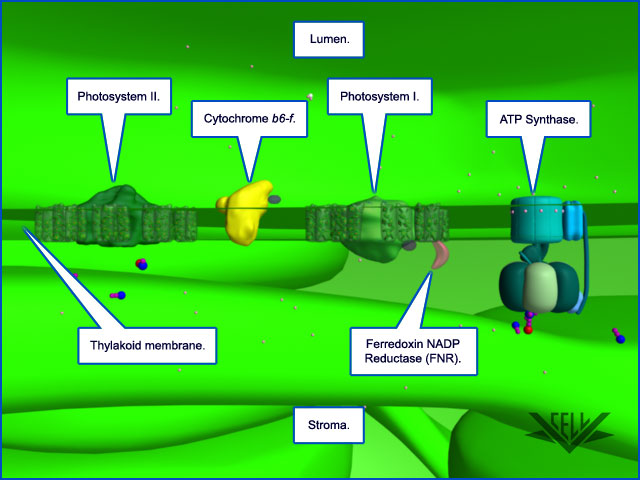
Homework: Read M31 (remember to follow the instructions on how to efficiently read the module).  Use the Virtual Cell's Animation on the Light Dependent Reactions or Crash Course's Explanation of Photosynthesis.

Wednesday, November 16, 2011

Krebs Cycle & the ETC

Today G period learned about the Krebs Cycle and C period wrapped up cellular respiration by learning about the ETC.  Click on the tab at the top of the blog "Photosynthesis & Cellular Respiration" for links to helpful animations.

On Friday you will have an open notes test on Photosynthesis and Cellular Respiration, so make sure you bring your notebook to class!

Friday, November 11, 2011

Elodea & Snails.... 48 hours later

Today students examined the results from their Elodea & Snails experiments.  Let's see what happened...

Thursday, November 10, 2011

Elodea & Snails Lab

Yesterday students were given the opportunity to completely design their own experiments involving Elodea and snails to determine if we can see products of photosynthesis and cellular respiration.


Tuesday, November 8, 2011

Elodea & Snails Investigation

After reviewing photosynthesis and voting on the best photosynthesis mini project, students worked on designing an experiment using Elodea & Snails to look at photosynthesis.

Here are some hints for your experimental design:

Materials:
Large test tubes (~50mL volume)
BTB indicator solution
Elodea
Snails
Aluminum foil
Test tube racks
Electronic balances
Graduated cylinders
Straws

BTB turns blue in the absence of CO2, BTB turns yellow in the presence of CO2.

We will be analyzing these experiments in class on Friday (Wednesday schedule).

For homework you need to complete the experimental design.   Make sure to include your hypothesis and identify the independent and dependent variables.

Monday, November 7, 2011

Electron Transport Chain in Photosynthesis

Click the picture below to link to images and step-by-step details of what happens in the Electron Transport Chain in the light dependent reactions in photosynthesis.

Reminder: Your photosynthesis mini-project is due tomorrow

Tuesday, November 1, 2011

Photosynthesis - C period

Please watch the video below.  Click on the picture to link to the video.   You should take notes which describe what happens in the electron transport chain.

You need to have completed these notes for Monday.  Step 1 in your notes should say "A photon of light hits the reaction center in Photosystem II."

Monday, October 31, 2011

Welcome Back to Photosynthesis

Today students had a reading quiz on sections 8-1 and 8-2.  After reviewing the reading quiz, we started to look at the details of photosynthesis.  C period - you should read pages 208-211 and take notes for a reading quiz.  G period you have a reading quiz on pages 201-207 tomorrow.

Monday, October 24, 2011

Stem cell lecture & starting photosynthesis


Today we had a mini lecture on stem cells, using HHMI's biointeractive series; Click here to see any of the animations we watched on stem cells.

After realizing that high school classes can be pretty great compared to large lecture style classes at some universities, we started to learn about photosynthesis.


On Monday when you return from AT you will have a reading quiz on pages 201-207, so take notes!

Tuesday, November 2, 2010

Photosynthesis Review

Today students made review posters for photosynthesis that included the details from a photon of light hitting photosystem II all the way through the production of 2 G3P molecules which get turned into glucose.

Tomorrow/Thursday we will be starting chapter 9 - cellular respiration.

Friday is your test on chapter 8.

Monday, November 1, 2010

ETC recap and intro to the details of the Calvin Cycle

Today we reviewed the light dependent reactions before moving on to the details of the Calvin Cycle. Click the picture below to link to the Calvin Cycle animation we watched in class.
Homework: bring markers, colored pencils and any other art supplies you'd like to use for a mini project in class tomorrow.

Monday, October 25, 2010

The Light Depedent Reaction

Today we spent the bulk of class learning about the light dependent reactions. Click on the picture below to link to the video clip we watched in class.


You have no homework over academic travel. It would be ideal if you reviewed your photosynthesis notes before coming to class on Monday.

Friday, October 22, 2010

Photosynthesis Overview

Today we did an overview of photosynthesis. Homework: Read section 8.3 and take notes for a reading quiz.

Friday, October 15, 2010

Today we started chapter 8: Photosynthesis. To get us started, we watched this video:


While some of you might call it lame or childish, it's catchy and has some helpful hints about photosynthesis. Click here to see the video of the Earth breathing that we watched.

Homework: Study for your test on Monday.

Tuesday, October 20, 2009

Take Home Test Due Monday

Photosynthesis & Cellular Respiration Test

1. Answer the following questions using complete sentences.

2. Do not write on this sheet of paper.

3. TYPE your answers, using Times New Roman Font, size 12, with 1.5 spacing.


1. What is the chemical structure and function of ATP? (5 points)

2. Draw and label a chloroplast, include all structures and say where each phase of photosynthesis takes place. (10 points)

3. What are the two phases for photosynthesis? (2 points)

4. Describe the light dependent reactions in detail. Begin with a photon of light hitting a chlorophyll molecule and finish with the creation of ATP by ATP synthase. (20 points)

5. Draw and label a mitochondria, include all structures and say where each phase of cellular respiration takes place. (10 points).

6. What are the products and reactants of glycolysis?

7. What are the products and reactants of the citric acid cycle?

This is due at the beginning of class on Monday October 26th. Late assignments will not be accepted.

Citric Acid Cycle & ETC

Today we reviewed the citric acid cycle and the ETC. We also listened to a song about the ETC. To see the lyrics, click here.
The Krebs (Citric acid cycle)

The ETC in the inner mitochondrial membrane.

Homework: Read the lab sheet, put it in your lab notebook and update your table of contents.

Friday, October 16, 2009

Calvin Cycle & Photosynthesis

Today we did an overview of the Calvin Cycle and students started the Photosynthesis Mini-Project.

To see the PowerPoint we used in class these past few days, click here.
To see examples of a tour map (one great and one terrible) click here.

    Working with a partner (or in a group of three), you will complete the following two tasks which will be due on Tuesday October 20th. This mini project will count as THREE homework assignments….So….Here is your chance to boost your grade.

Task 1: Create a map of the areas that visitors will see on the trip. Your map should include the following information
  • How will you enter the plant?
  • A labeled drawing of a plant cell (remember, plant cells are different than animal cells. Be sure to look at the diagram on page 175 for details).
  • A close up labeled drawing of a chloroplast

Task 2: Write a script for a tour guide leading trips to the light dependent reactions and the Calvin Cycle. Your script should include the following information

  • The general equation for photosynthesis
  • A detailed explanation of what happens in the electron transport chain
  • The reactants and products (key components) of the electron transport chain.
  • Where the ETC takes place
  • Where the Calvin Cycle takes place
  • What are the reactants and products of the Calvin Cycle
You also need to remember to cite your sources. If you use only your notes include a citation that says "Information from class notes." If you used any other sources, even images from google you need to include the URL.

Wednesday, October 14, 2009

Electron Trasport Chain in Photosynthesis

For class on Wednesday/Thursday
Today students used a guided notes sheet which focuses on photosynthesis as a redox process, the two stages of photosynthesis and the ETC.

Homework:
Click the picture below to link to the video we watched in class. Finish watching it and take down the following steps (below the picture) to complete your notes on the electron transport chain.1. A photon of light hits a chlorophyll molecule (creating resonance energy).
2. When energy reaches the reaction center, an electron is released. One photon of light is needed for each electron.
3. Two electrons and two protons go into an electron carrier.
4. Electrons in Photosystem II are replaced by the splitting of water molecules. H+ ions are pumped into the lumen and O2 is released.
5. As electrons move towards Photosystem I, H+ ions are pumped across the thylakoid membrane to the lumen.
6. Electrons reach Photosystem I
7. Photons re-energize electrons
8. Two electrons and a H+ ion are added to NADP+ to form NADPH
9. The gradient of H+ ions is used by ATP Synthase to create ATP
10. The vital products of the electron transport chain are ATP, NADPH and O2