Post them here!
If there is something you have a question about for things in chapters 13-15, post them here. I will either answer the questions or direct you to where you can find the answer in your book or online.
Why set this up? So your peers can learn from the questions you ask.
Questions will be answered on this post through Wednesday 2.25.09 at 9pm.
Friday, February 20, 2009

Evolution Unit Test
Here is what you should study for the test on chapters 13-15.
* 13 packet, parts one and two
YOU WILL HAVE A FEW MORE NOTES ON CHAPTER 15 IN CLASS ON TUESDAY as well as the opportunity to get your questions answered.
* 13 packet, parts one and two
* Online evolution quiz
* Movie notes sheets Why Sex? and Great Transformations
* Chapter 14 Summary and Review Questions
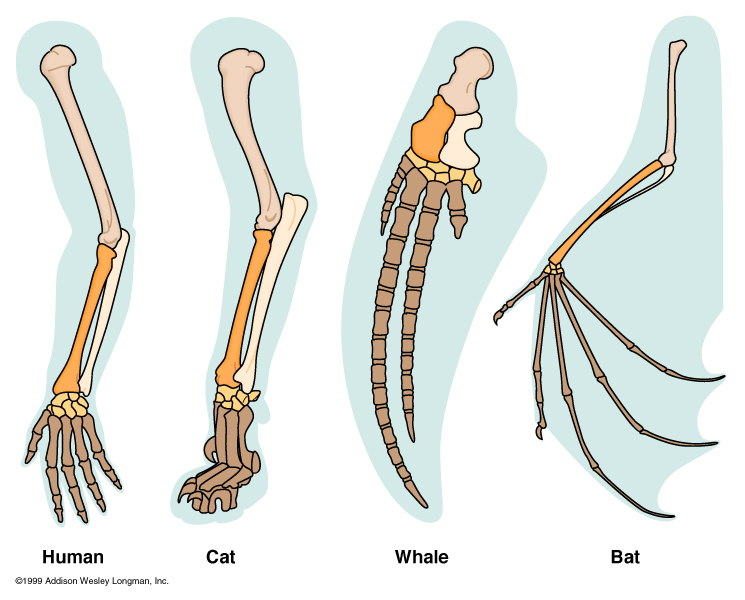
* Constructing an amaylase evolutionary tree lab (can you interpret a cladogram?) If you are confused about this section you can go back and review this post.
YOU WILL HAVE A FEW MORE NOTES ON CHAPTER 15 IN CLASS ON TUESDAY as well as the opportunity to get your questions answered.
Thursday, February 19, 2009
Great Transformations
To help supplement the book, we are continuing with watching the PBS evolution series. Today we watched Great Transformations. Click the picture below to get to activities that were mentioned in the video.

Tuesday, February 17, 2009
Why Sex?
 In evolutionary terms, sex is more important than life itself. Sex fuels evolutionary change by adding variation to the gene pool. The powerful urge to pass our genes on to the next generation has likely changed the face of human culture in ways we're only beginning to understand.
After some careful thought, the activity we were going to do today was more hands-on than minds-on, so... Instead we watched "Why Sex" from the PBS Evolution Series.
Students were asked to answer the following questions:
1. What makes the lizards unique?
2. They do so well, as all female species, why is there sex? Are males really necessary?
3. What is the biological reason for sexual reproduction?
4.
5. What is the Red Queen Theory? Why is it called that?
6. Sex generates variability in a population.
7. Origins of Sex: How did it all begin?
8. “The sight of a Peacock makes me sick” —
9. What is sexual dimorphism?
10. What did the peacock experiments provide support for?
11. Explain behavioral traits v. physical traits
12. Song Birds – parenting, social monogamy & role reversal.
13. What are the two chimp populations that are studied?
14. What is one explanation given for why different behaviors have emerged in each population?
15. How is infanticide interrupted?
Saturday, February 14, 2009
Saturday Lab & Speciation Next Week
For what A & D block did in lab today click here.
On Tuesday we will be doing a short, hands-on activity on speciation. Before coming to class, please read sections 14.1-14.3. It's only four pages and knowing this information will help you understanding what's going on.
On Tuesday we will be doing a short, hands-on activity on speciation. Before coming to class, please read sections 14.1-14.3. It's only four pages and knowing this information will help you understanding what's going on.
Thursday, February 12, 2009
Hardy-Weinberg & Microevolution
 Microevolution happens on a small scale (within a single population), while macroevolution (which we will be talking about in Chapter 15) happens on a scale that transcends the boundaries of a single species. Despite their differences, evolution at both of these levels relies on the same, established mechanisms of evolutionary change.
Today (and tomorrow for C & D blocks) we are wrapping up chapter 13, which includes microevolution. The key things that we are focusing on today are:
* Microevolution is a change in a population's gene pool over time.
* What the Hardy-Weinberg Equation is and how it is used in public health
* Causes of microevolution
* Real examples for the bottleneck & founder effects.
* Polymorphism in populations
* Geographic variation (clines)
You will need to finish the last five pages of chapter 13 for homework. The last page in your packet lists the key concepts and terms for those five pages, there is space provided for you to take notes.
Once you are finished taking notes, take the self quiz located in the “Evolution” sidebar, click on Self Quiz on Evolution. Just guess for question numbers 3, 11, 20 and 22-25 (you are not responsible for this information). You need to answer all the questions if you want to see what the correct answers are.
This is a great way for you to see if you actually understand the material. Try to answer the questions without looking at your notes.
Wednesday, February 11, 2009
Lab 10: Constructing an Amylase Evolutionary Tree
Amylase is an enzyme in human saliva that breaks down starch. If you chew a piece of plain white bread, eventually, it will start to taste sweet. What's going on here? Well, amylase is breaking down the starches (a storage polysaccharide) and releasing the sugars. What does this have to do with evolution?
Scientists can look at evolutionary relationships based not only on homologies but also by using protein sequences; after all amino acids are the genotypes which make proteins which display phenotypes. In this lab you will be constructing an evolutionary tree by comparing amino acid sequences in amylase. The biggest thing to remember in this lab is:
What does that mean? It means take your time, because one little careless mistake will throw off the rest of your data.
Does what you are learning in the lab have any real-world connections? YES! For homework:
Part One: Read Understanding Phylogenies, make sure you click "next" at the bottom of the page, so you get to "Understanding Phylogenies (2 of 2)."
Part Two: Read Evolutionary Evidence Takes The Stand and write a 3-2-1 using COMPLETE SENTENCES. 3 Things you learned, 2 things you have questions about and 1 thing you would like to learn more about.
This is due the next time class meets.
Scientists can look at evolutionary relationships based not only on homologies but also by using protein sequences; after all amino acids are the genotypes which make proteins which display phenotypes. In this lab you will be constructing an evolutionary tree by comparing amino acid sequences in amylase. The biggest thing to remember in this lab is:
GO SLOW TO GO FAST
What does that mean? It means take your time, because one little careless mistake will throw off the rest of your data.
Does what you are learning in the lab have any real-world connections? YES! For homework:
Part One: Read Understanding Phylogenies, make sure you click "next" at the bottom of the page, so you get to "Understanding Phylogenies (2 of 2)."
Part Two: Read Evolutionary Evidence Takes The Stand and write a 3-2-1 using COMPLETE SENTENCES. 3 Things you learned, 2 things you have questions about and 1 thing you would like to learn more about.
This is due the next time class meets.
Tuesday, February 10, 2009
Titanoboa - Titanic Boa Fossil From Colombia Is World's Largest Snake
This is the headline from February 4th, 2009 Scientific Blogging. "Estimated Titanoboa size: 42 feet (13 meters); 1140 kilograms. According to the Guinness Book of World Records, the longest snake ever measured was 10 meters (33 feet) in length. The heaviest snake, a python, weighed 183 kilograms (403 pounds)."
 To read more on this story, see pictures and even a video clip, click here.
 To read more on this story, see pictures and even a video clip, click here.
Monday, February 9, 2009
Evidence of Evolution, Darwin's Theory & The Modern Synthesis
Tomorrow in class we will be working on 13.2 through 13.6. Key topics include:
*the fossil record
*biogeography
*comparative anatomy
*comparative embryology
*molecular biology
*natural selection as a component of evolution
*the case study of the quiet crickets
*populations & introducing population genetics
To sum up natural selection and the forces involved in that process we will watch this video clip:
and answer these questions (which are adapted from the PBS teacher's website)
1. Below are four components of natural selection. Describe each of these components.
Genetic variation:
Overproduction of offspring:
Struggle for existence:
Differential survival and reproduction:
2. What kinds of limited resources can create a struggle between individuals in a population?
Evolution is.. Evolution is not..
It is a lot more fun to actually use biotechnology than it is to talk about it, so rather than complete chapter 12 as a separate topic, it will be incorporated into lab time. As a result it is time to start chapter 13!
Class started today with a brainstorming session answering the prompts "Evolution is..." and "Evolution is not..." There were some great talking points and questions raised during this time. After brainstorming, students took a pre-assessment survey at the end of the unit students will take this survey again. One statement in the survey (number 15) is: "Evolution is only a theory." To directly address this statement, we watched an excerpt from the PBS series Evolution.
The next clip we watched addresses section 13.1: A sea voyage helped Darwin frame his theory of evolution.
In this clip Darwin talks about a "tree of life," today scientists can you cladograms (like the ones below) to show evolutionary relationships. Cladograms can be simple representations like this one.... Or they can be the result of complex research involving only genus and specie, like this one for dinosaurs. Click the picture to make it larger.
 In lab this week you will be making cladograms using genetic sequences.
Class started today with a brainstorming session answering the prompts "Evolution is..." and "Evolution is not..." There were some great talking points and questions raised during this time. After brainstorming, students took a pre-assessment survey at the end of the unit students will take this survey again. One statement in the survey (number 15) is: "Evolution is only a theory." To directly address this statement, we watched an excerpt from the PBS series Evolution.
The next clip we watched addresses section 13.1: A sea voyage helped Darwin frame his theory of evolution.
In this clip Darwin talks about a "tree of life," today scientists can you cladograms (like the ones below) to show evolutionary relationships. Cladograms can be simple representations like this one....
 Or they can be the result of complex research involving only genus and specie, like this one for dinosaurs. Click the picture to make it larger.
 In lab this week you will be making cladograms using genetic sequences.
Thursday, February 5, 2009
Update for the Remainder of the Week
I will be in Boston on Friday and Saturday, but you still have class. Below is the schedule for who is covering your class as well as what you will be doing.
Friday:
D Block: Mrs. Llewelyn
Bring your books and complete the packet for sections 11.15-11.19. You can also work on your abstract.
C Block: Mr. Wardrop
Bring your books and complete the packet for sections 11.15-11.19. You can also work on your abstract.
Saturday:
D Block: Ms. Ryder
Bring to class a hard copy of the Stem Cells, Cloning and Regeneration Handout. You will be watching video and lecture clips from the HHMI series.
A Block: Mrs. Bryan
Bring your books and complete the packet for sections 11.15-11.19. You can also work on your abstract.
Wednesday, February 4, 2009
Stem Cells, Regeneration & Cloning

Today, tomorrow and Friday (depending on when your class meets) we will be expanding on the minuscule amount of information in your text on stem cells, regeneration and cloning. Using video clips and animations from HHMI's 2006 Holiday Lecture Series, we will learn, among other things, where embryonic stem cell come from, prior theories on human development and about somatic cell nuclear transfer.
Click here for video clips
Click here for animation
Tuesday, February 3, 2009
Welcome Back with Gene Regulation
Today we slowly got back into the swing of things by learning about gene regulation in prokaryotes. In the next class period we will delve into cell differentiation and stem cell research using video clips from the HHMI lectures.
Thursday, January 29, 2009
Chapter 11
We will begin chapter 11 when you return from break. You have been emailed the first part of the packet for section 11.1.
Please print this out and bring it to class on Tuesday. You will also need to read pages 208-209 BEFORE coming to class on Tuesday Feb 3.

We will be taking notes on gene regulation in prokaryotes as well as watching some video clips.
Please print this out and bring it to class on Tuesday. You will also need to read pages 208-209 BEFORE coming to class on Tuesday Feb 3.
We will be taking notes on gene regulation in prokaryotes as well as watching some video clips.
Never Say Prove Again!
I thought we talked about this the last time you submitted lab reports, but perhaps we didn't or it slipped your mind...
 In science you can never really PROVE anything; you can disprove a theory and you can find support for a hypothesis but you can't PROVE it. Hopefully this classy James Bond movie poster will help you remember.
 In science you can never really PROVE anything; you can disprove a theory and you can find support for a hypothesis but you can't PROVE it. Hopefully this classy James Bond movie poster will help you remember.
Tuesday, January 27, 2009
More Practice for the midterm
Don't be this guy...
 Be this guy...

Thanks to Dr. Madoka Gray-Mitstumune of UMB Fredricton there are tons of review questions, lecture notes and vocab lists for our book here.
REMEMBER: THIS IS NOT OUR COURSE, JUST A SIMILAR COURSE AS AN ADDITIONAL RESOURCE FOR MORE PRACTICE.
Friday, January 23, 2009
Mid Year Study Guide
Here it is....what you've been waiting for....
Review your lab reports!!! The graphs and results and discussion questions are included on the mid-year.
Review your lab reports!!! The graphs and results and discussion questions are included on the mid-year.
Chapter 1
What is a hypothesis?
What is a theory?
What is the scientific method?
What is a controlled experiment? Why is it important?
What are the 3 domains? What are the kingdoms?
What are the 7 characteristics of living things?
Chapter 2
What is an element? a molecule? a compound?
What is the atomic number of an element? The mass number?
What is an isotope? A radioactive isotope?
What is an ionic vs. a covalent bond? A polar vs. nonpolar covalent bond?
What are hydrogen bonds? Why are they important in molecules, especially water?
What is the pH scale? What represents acidity vs. alkalinity?
What is a solute, solvent and solution?
Chapter 3: Organic Molecules
- What is an organic compound?
- What is an isomer? Be able to recognize structural isomers.
- Functional groups – what are they? What are they characteristic of (i.e. alcohols, ketones, aldehydes, etc.)? What class of macromolecules are they present in – carbohydrates, lipids, proteins, nucleic acids?
- What are the building blocks of each of the classes of molecules? How many are there?
- What is dehydration synthesis? What is hydrolysis?
- Carbohydrates:
- What elements make up carbohydrates? What is their function? What is an example?
- Monosaccharides – glucose, fructose, galactose
- Polysaccharides - What are starch, glycogen and cellulose made from? Where is each found?
- Be able to recognize a carbohydrate.
- Lipids:
- Why are lipids grouped together?
- What elements primarily compose fats? What are the examples of lipids – fats, waxes, phospholipids, steroids – and what is the function of each type?
- Be able to recognize a triglyceride molecule.
- Proteins:
- Know the general functions of proteins (structure, contractile, storage, defense, transport, communication, enzymes)
- Describe the structure of a protein. What elements are in proteins? What functional groups are present?
- What are some examples of proteins?
- Know the four levels of the protein’s structure: primary (amino acid sequence), secondary (alpha helix and pleated sheets), tertiary (overall shape – globular vs. fibrous), and quaternary (relationship between multiple polypeptide chains). Do all proteins have all four layers?
- Nucleic Acids:
- What are the subunits of the nucleotide (sugar, phosphate group and a nitrogenous base)
Chapter 4: A Tour of the Cell
- What is the difference between a prokaryotic and eukaryotic cell? Which is more complex?
- Make a list (or a chart) of all the cell organelles mentioned in the chapter. What is the function of each? Where in the cell is it found?
- Draw a plant cell and an animal cell. How are they similar? How are they different?
- How are the chloroplasts and the mitochondria similar? How are they different?
A. MEMBRANE STRUCTURE AND FUNCTION
1. What is selective permeability?
2. Why are membranes important within the cell?
3. What is the cell membrane composed of and how is its structure helpful in its function?
4. Define the terms: passive transport, diffusion, osmosis, facilitated diffusion, active transport. Give biological examples of each of these processes.
5. What is tonicity? Why is it important? Give an example of a biologically important situation of a hypotonic solution. Of a hypertonic solution. Of an isotonic solution.
6. What is a concentration gradient? What does it mean to travel down a gradient? Against a gradient? Are concentration gradients independent of one another?
7. What is the importance of concentration gradients within our body?
8. What type of solution is healthiest for animal cells? For plant cells?
9. What are the processes that transport very large molecules?
B. ENERGY AND THE CELL
- Describe an exergonic and an endergonic reaction.
- What is energy coupling? How does it help a cell perform work?
- What is cellular metabolism?
- How does the structure of ATP make it a “high energy” molecule?
- What is the process by which the 3rd phosphate group is cleaved off of the ATP molecule?
C. ENZYMES
- What do enzymes do for a reaction? Why are they important for life?
- How specific are enzymes and their shapes for their substrate? Where does the substrate bind with the enzyme?
- What is the “induced fit” model?
- What is a negative feedback loop?
Chapter 6
GENERAL INFORMATION
What is aerobic respiration?
What is anaerobic respiration? How much ATP does it produce?
What is cellular respiration? How much ATP does it produce?
What are redox reactions? What is oxidation (gain or loss of electrons?)? What is reduction (gain or loss of electrons?)?
Explain in term of cellular respiration why we breathe oxygen, and exhale carbon dioxide?
What is the difference between substrate level phosphorylation and chemiosmotic (or oxidative) phosphorylation?
GLYCOLYSIS
Where does glycolysis occur?
What are the net (Total/overall) products of glycolysis?
Why do we invest energy to make glycolysis occur?
How much of the energy available in a glucose molecule is harvested as ATP in glycolysis?
If oxygen is present, where does pyruvic acid go? What happens to it?
If oxygen is not present, where does pyruvic acid go? What happens to it?
Why would yeast choose to perform anaerobic respiration, as in our lab, even though oxygen was available to them?
FERMENTATION
What is the purpose of fermentation? (What does it recycle for glycolysis to continue?)
When does fermentation take place?
What does a build up of lactic acid cause in our bodies?
KREBS CYCLE
Where does the Krebs cycle take place?
What are the net (Total/overall) products of the Krebs cycle? For each acetyl coA molecule? For each glucose molecule?
How is pyruvic acid changed before it will enter the Krebs cycle?
What is the primary energy carrier that is produced in the Krebs cycle?
ELECTRON TRANSPORT CHAIN (SYSTEM)
Where does the electron transport chain take place?
What are the net (Total/overall) products of the ETC?
What molecules enter the electron transport chain?
What specifically happens to the electrons in the ETC? What is the final electron acceptor in this system? What happens to that product after it initially accepts electrons?
How is the transport of H+ ions linked with the ETC? Why is this important?
What does the proton gradient drive the ATP synthase? Why does it only happen at this specific location in the membrane (i.e. why can’t the H+ ions move across the membrane at any point)?
Chapter 7 - Photosynthesis
What is the path an electron takes through photosynthesis?
What is the balanced equation for photosynthesis? What is reduced and what is oxidized?
What is an autotroph? A producer? (What are we?)
Why is chlorophyll green? What wavelength (in nm) does it reflect?
Describe the anatomy of a leaf. What is the stomata and what happens here? The thylakoid – what is present and what occurs? The chloroplasts – what happens here? The grana? The stroma – what happens here?
What are the light reactions? What happens and what is created?
What is the dark reaction? What happens and what is created?
What is a photosystem? What is the difference between Photosystems I and II?
What is the reaction center? What are antenna molecules? Where do the electrons come from that are put into the photosystem and eventually move to the primary electron acceptor?
What are the differences between the electron transport chains in the mitochondria and the ETCs in the thylakoid?
How many times the Calvin cycle have to turn to produce on G3P? one glucose? How much CO2, ATP and NADPH does each of these consume?
How do plants store their excess sugar?
What is carbon fixation?
Chapter 8 - Mitosis and
1. Know the multitudinous definitions that are in the chapter: sexual reproduction, asexual reproduction, life cycle, chromosomes, chromatin, sister chromatids, centromere, cell cyle, mitosis, mitotic spindle, kinetochore, cleavage furrow, cell plate, anchorage dependence, density-dependent inhibition, cell cycle control center, tumor, malignant vs. benign tumors, metastasis, somatic cell, homologous chromosom, autosomes, diploid, haploid, gametes, fertilization, zygote, meiosis, crossing over, chiasma, genetic recombination.
2. karyotype, trisomy 21 (Down’s syndrome), nondisjunction, deletion, duplication, inversion, translocation. You do NEED to know these terms, this is a correction from the first email.
3. What are the four phases of mitosis and meiosis? What similarities exist in these phases between mitosis, meiosis I and meiosis II? What makes them different? Which one process (mitosis, meiosis I and meiosis II) is most different from the others? Explain your answer.
4. How much time of the entire cell cycle is spent in Interphase? M phase?
5. How does cytokinesis differ for plant and animal cells?
6. What are the three functions of mitosis? Briefly describe each.
Chpt 9 – Patterns of Inheritance
- Mendel’s principles
- Dominant vs. recessive traits
- Genotype s. Phenotype
- Parental, F1 and F2 generations
- Punnett Squares and the rules of probability
- Monohybrid cross – define and know expected ratios
- Dihybrid cross - define and know expected ratios
- Family Pedigrees
- Variations of Mendel’s Patterns
- Incomplete dominance
- Codominance
- Sex linkage
- Pleiotropy
- Polygenic inheritance
- Chromosomal basis of inheritance
- Chromosomal theory of inheritance
- Sources of variation
- Linked genes
Thursday, January 22, 2009
Chapter 10 Test

Today (and tomorrow) students will have a test on chapter 10. A friendly reminder that I will only preview labs if they are sent to me before 7pm this evening.
Wednesday, January 21, 2009
HHMI on HIV & AIDS

Today C blocked wrapped up chapter 10 by learning about HIV from the HHMI Holiday Lecture Series.
To watch some of the animations we watched in class, click here.
Homework: Review for your test and work on your lab reports.
Tuesday, January 20, 2009
pGLO Lab Report Rubric
This lab report should follow the following guidelines:
1. No more than 3 pages, 1.5 spacing (not 1.3 etc), Size 12, Times New Roman Font, 1.5 inch margins and page numbers.
2. See The Guide to Writing Scientific Papers for additional formatting details.
RUBRIC
Title 3 points
Includes the environmental factors that were manipulated (1 pt).
The parameter that was measured (1pt)
The specific organism that was studied (1pt).
Purpose (2 pts)
Relevant background information (5 pts)
hypothesis (5pts)
You only need to write one sentence for this section. "See Bacterial Transformation: The pGLO System from BIO-RAD pages 14 and 15"
Here the researcher presents summarized data for inspection using narrative text (4 pts)
You must include a tables and/or figures to display summarized data (6pts)
All tables and/or graphs have…
Title (1pt)
A description explaining what is presented (4 pts)
Here, the researcher interprets the data in terms of any patterns that were observed (5 pts)
An explanation of how the results differed from those hypothesized (5 pts)
Describe the evidence that indicates whether your attempt at performing a genetic transformation was successful or not (this is question number 4 in the Lesson 3 Review Questions). (5 points)
Include at least 3 sources of error AND explanation for the impact these would have, as well as ways to eliminate them in a future experiment. (5 pts)
This section simply states what the researcher thinks the data mean, and, as such, should relate directly back to the problem/question stated in the introduction.
Acknowledgments 3 points
In this section you should give credit to people who have helped you with the research or with writing the paper. If your work has been supported by a grant, you would also give credit for that in this section.
This section lists, in alphabetical order by author, all published information that was referred to anywhere in the text of the paper. It provides the readers with the information needed should they want to refer to the original literature on the general problem.
Total possible score: 73 points
Subscribe to:
Posts (Atom)