Wednesday, May 11, 2011

Data Manipulation in Excel

Excel can be used for many things: quickly finding the mean for a set of data, calculating standard deviation and even......... making a cartoon of Mike Tyson. Today students completed a worksheet on their computers where they needed to manipulate sets of data. Below is the worksheet with the hyperlinks.

Homework: study for your test on Friday. The information on standard deviation will be on the final exam, but not on the test on Friday.


Using Excel to Manipulate Data

A. Open the first file: 2003 American League Baseball Salaries

1. List three ways in which you could manipulate this data.

2. Sort the data so that each position is grouped together. Make sure that the salary of each player stays with the correct position. How many catchers are there?

Find the mean salary for each of the positions and fill in the information in the table below.

Catcher

1st Base

Outfielder

Shortstop

Pitcher

3rd base

2nd base

Which position has the highest mean salary?

B. Open the Price of Electricity file.

3. How many years have complete records for the price of electricity?

4. Create a scatter plot in Excel (or numbers) showing the average price in electricity for the years 1986-1996. Make sure to correctly label the x and y axis and write a title for the graph. Add your graph to this word document. Unsure how to make an xy scatter plot? Click through this PowerPoint if you are a Mac user.

5. In your own words, explain standard deviation in the space below. If you don’t know what standard deviation is, read about it here (it’s the first term on the list).

6. Go back to your Excel / Numbers file. Calculate the standard deviation for 1986-1995. To do this, click in the cell next to the annual average and type =STDEV(

Then highlight the data for each month in that specific year

Close the ) and press enter/return.

Highlight this cell and place the cursor on the edge of the cell so it changes from an arrow to a +

Drag the blue edge straight down the column, until you have reached 1995.

You now have the standard deviation for each year.

7. Add standard deviation bars to your graph. If you do not know how to do this, watch this video if you use a Mac or watch this video if you have the new version of Windows. You may only be able to add the error bars for three years at a time.

8. Turn your graph from an xy scatter plot into a bar graph. Again, make sure it is correctly labeled.

9. What does the green triangle in the left top corner of each standard deviation box signify?

10. Which year had the most consistent gas price?

11. Which year had the largest standard deviation? What does this tell you about the gas prices that year, compared to the other years?

12. On a scale of 1-10 (ten being impossible, one being super easy) how hard was this assignment? Please write the name of each person in the group and his/her response

13. Please complete the feedback table below. For each of the four tasks, please write if you already knew how do to this or what it is. Write yes if you knew it before or no if you didn’t not know it before class today.

Name

What standard deviation is

How to find standard deviation

How to add error bars to a graph

How to find the mean using Excel

Tuesday, May 10, 2011

Google Data

Google Data Interpretation.

Part 1: Click the picture below to access the world fertility data.


Part 2: Use Google Public Data to practice interpreting data. Choose any data set you want. Interpret the data as if it were the results of an experiment you did.

Homework: study for your test on Friday

Friday, May 6, 2011

Proteins

Today we focused on the third class of macromolecules: Proteins.

Brace yourself for this shocking discovery....proteins are formed when amino acids are joined together by peptide bonds and when water is removed! Are we noticing a trend yet....?

Proteins having many functions including as enzymes and transport molecules. We didn't spend a lot of time on enzymes because we learned about this in the fall. Click here to see a video of how enzymes work.

Proteins play in an important role in transport of molecules across a cell membrane. As you know, phospholipids have a hydrophylic head and hydrophobic tail. In order for the transport proteins to maintain their location in the bilayer they have to have polar and nonpolar components.

There is no homework for Monday other than to study for your test on Friday May 13th.

Wednesday, May 4, 2011

Lipids!

Today students completed a short guided notes sheet, before building models of various fatty acids.

Homework: Due Friday (courtesy of Mrs. Yust-Averett). Answer the questions below, you do not need to write the questions, just the number of the question.

1. What is the elemental composition of lipids?

2.
How can you differentiate between carbohydrates and lipids when looking at a molecule or given a chemical formula?

3. What are the 4 main types of lipids (molecules)? (you will need to look this up).

4. What are the main functions of lipids?


5. What type of covalent bond (linkage) can be found between a glycerol molecule and fatty acid tails?


6. Are lipids polar or non-polar? How does this effect their interaction with water?


7. Explain the structure of triglycerides (look this up).


8. What is the main function of triglycerides (look this up).


9. Compare saturated and unsaturated fatty acids (number of hydrogen atoms, physical state at room temperature, healthy or unhealthy, single or double bonds between carbon atoms, ease broken down by body, sources found in nature, food examples) (look this up).

Tuesday, May 3, 2011

Carbohydrate Structure

Today students built models of carbohydrates and learned how monosaccharides join together to form di and polysaccharides.


Carbohydrates Homework Questions

1. Which elements do carbohydrates contain, and in what ratio?

2. If a sugar compound has 11 oxygen atoms, how many hydrogen atoms does it contain?

3. Based on their molecular formulas, which of the following are NOT carbohydrates?

a. C3H803
b. C10H18O9
c. C18H32O16
d. C4H8O2
e. C16H32O2
f. C6H12O6

4. For each molecule below, determine if it is a monosaccharide, a disaccharide, or a polysaccharide. You will need to look these up on your own.

a. Fructose

b. Ribose

c. Cellulose

d. Glucose

e. Sucrose

f. Glycogen


5. Describe a biological function for each of the following carbohydrates
a. Cellulose
b. Ribose
c. Starch
d. Glycogen
e. Deoxyribose
f. Fructose
g. Sucrose

6. Draw the molecular structure of the following carbohydrates:
RIBOSE
GLUCOSE


7. Briefly describe the process of the condensation reaction (dehydration synthesis) for carbohydrates.


8. Briefly describe the process of the hydrolysis reaction for carbohydrates.

Monday, May 2, 2011

Welcome Back! (to chemistry)

Over the next two weeks we will be reviewing some of the chemistry we learned at the beginning of the year, as well as going into more depth on the structure of molecules. This information is NOT in your textbook, so you will have more class handouts use additional websites.

Today we talked about what elements make up the human body and their functions, as well as how these elements compare to the elements in the Earth's crust. We also learned about the properties of water.

Homework: Read each statement below and explain (in 2-3 sentences per statement) how the properties of water are related to the phenomena that are described. More than one property may be used to explain a given phenomena.

1. During the winter months, air temperatures in the northern United States can remain below zero deg. C for months; however the fish and other animals living in the lakes survive.

2. Many substances, for example salt, dissolve in water very quickly.

3. When you pour water into a 25 mL graduated cylinder, a meniscus forms at the top of the water column.

4. Sweating and the evaporation of sweat from the body surface help reduce a human's body temperature.

5. A bottle contains oil and water. You shake the bottle vigorously and put it on the table. Over time, the oil and water separate.

6. If you touch the edge of a paper towel with water, the water will move up into (or be absorbed by) the towel.


Here's a reminder of some of the properties of water:
Life as we know it could not exist without water. All the chemical reactions of life occur in aqueous solution. Water molecules are polar and are capable of forming hydrogen bonds with other polar or charged molecules. As a result, water has the following properties:

A. H2O molecules are cohesive; they form hydrogen bonds with each other.

B. H2O molecules are adhesive; they form hydrogen bonds with polar surfaces.

C. Water is a liquid at normal physiological (or body) temperatures.

D. Water has a high specific heat.

E. Water has a high heat of vaporization.

F. Water’s greatest density occurs at 4°C.


Here's a link about water & hydrogen bonds that you might find helpful.

Wednesday, April 13, 2011

Ecology & Plants Test

Today and tomorrow, students will take their test on ecology & plants. As the test is quite large and the final exam is looming, this material will NOT be on the final exam.

Monday, April 11, 2011

Population Dynamics Simulator

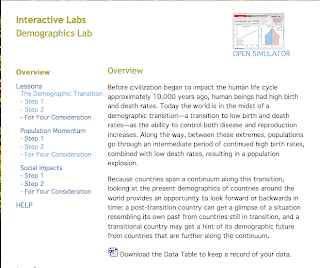
Today in class students completed a webquest examining populations dynamics in several countries. Click on the picture below to access the simulation.


An important point to remember for this activity is: The demographic transition is complete when the birthrate falls to meet the death rate and population growth stops.

Below are the directions for this activity:
1. Download the data table.
2. Under "Lessons" click "The demographic transition."
3. Read the background information and the questions, so you know what to answer at the end of this section.
4. Open the simulator (click the icon on the top right).

We will go over all of the aspects of the simulator as a class before you begin experimenting with these tools.

Homework: Study for your test on Wednesday/Thursday! Please bring your computer to class on Tuesday so we can continue to work with the simulator.

Friday, April 8, 2011

Random Sampling

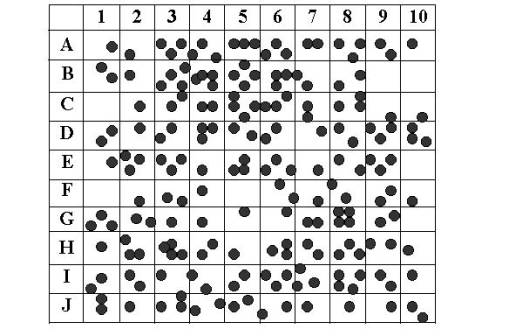
Last night, students read section 5-1 on population growth. Before scientists can measure the growth of a population over an extended period of time, they need to establish a baseline. This can be done by random sampling. Today students did a dry lab to practice random sampling.

They used data (below) on a population of sunflowers.

Homework: read sections 5.2 and 5.3. We will be doing a lab where we examine human population data, not having a lecture on these sections. We will have time at the beginning of class if you have questions on anything in the readings.

If you are able to, please bring a computer to class.

Thursday, April 7, 2011

Finishing Chapter 4

Today (yesterday for G period), we will wrap up chapter 4. Please note that section 4-4 has been removed from your test next week and understanding the climate diagrams in section 4-3 has been added.

To help recap chapters 3 and 4 we played a combination review jeopardy and learning jeopardy where new material was introduced.

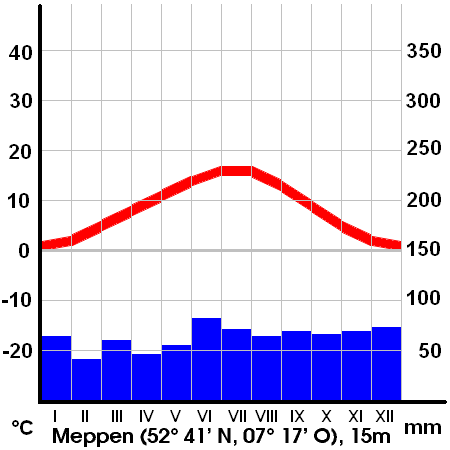
Below is a climate diagram for Meppen, Germany. The red line indicated temperature and the blue bars represent the amount of precipitation each month.


The months are in Roman numerals at the bottom of the diagram. I = January and XII = December.

Where's Meppen? Check out the map below (it's about an eight hour drive north of Lugano).


At the end of the day, I will email the jeopardy review to all the classes. For homework, please read section 5-1. You will not have a reading quiz, but if you are someone who benefits from taking notes, then absolutely take notes!

Tuesday, April 5, 2011

Section 4-2

Today we review section 4-1 on climate and moved onto section 4-2. F period was the only class to finish all the way through marine succession. Your homework, if you are not in F period is to finish reading section 4.2. Click on the linked vocab words to see the videos we didn't get to watch in class.


Biotic Factor

Ecological Succession

Abiotic Factor

Primary Succession

Habitat

Pioneer Species

Niche

Secondary Succession

Resource

Competitive Exclusion Principle

Predation

Symbiosis

Mutualism

Commensalism

Parasitism


Monday, April 4, 2011

Article Sharing & Climate Change

Today students shared their article summaries from the post below. After the articles we shared, we talked about the link between the amount of CO2 in the atmosphere and temperature increase. We also learned about some of the effects of an increase in global temperature.

Click here for the climate change bathtub simulation.


Homework: Read section 4.1 and take notes for a reading quiz.

Friday, April 1, 2011

Carbon & Nitrogen Cycles

Today we recapped the carbon and nitrogen cycles. Here's your homework for Monday:

Click on your name below. Read that specific web page. Write a summary of what you read, include the title of the article. Your summary can be either in paragraph form or bullet points. If there are graphs on your webpage, be sure to look at them and read the captions!

D period:
Natalia
Alberto
Faye
Victoria
Heidi
Bogdan
Alfredo
Claudia
Nabila

F period:
Viktor
Phil
Rodrigo
Karl
Caro
Carla
Asela
Georgy
Njani

G period:
Edis
Fernanda
Anderson
Margarita
Lucianna
Otto
Vincent
Nick
Andrea
Layla

Thursday, March 31, 2011

Ecological Pyramids & Nutrient Cycles

Today (and yesterday) students took notes on how energy and matter moves through ecological systems. We compared three types of ecological pyramids, food pyramids vs. webs, and started to look at cycles of matter.

Homework: Read and take notes on pages 78-80 for a reading quiz on Friday.

We also watched two video clips (and of course the water cycle song is cheesy, but that's the point!)

The Water Cycle


The Carbon Cycle

Tuesday, March 29, 2011

Starting Ecology

For homework, finish reading section 3.2

Saturday, March 26, 2011

Plant Cell Jeopardy Review


On Monday you will have a quiz on sections 22.1, 23.1, 24.1 and dichotomous keys. On Friday we played jeopardy to review these sections. You have been emailed the powerpoint if you would like additional review. Please remember, that just because it is NOT in the jeopardy game, doesn't mean it's exempt from the quiz.

Tuesday, March 22, 2011

Guest Lecture: Forensic Entomology

Today, for G and D periods (and Thursday for F period), we have Ryan K. (PhD candidate) and Dr. Merritt who visited classes to talk about forensic entomology. Students used fake maggots to determine the postmortem interval from a real case that Ryan worked on last year.

Monday, March 21, 2011

Flower Dissection!

Today in class we did a flower dissection. Tomorrow we will be looking more closely at the non-reproductive parts of plants. To prepare, please read section 23.1 and take notes for a reading quiz.

*** G and D periods, you luck out, because tomorrow you have a guest coming to class. So... you will not need to complete this assignment until Wednesday (G period) or Thursday (D period).

Friday, March 18, 2011

Private Life of Plants - Flowering

Today we watched part 3 of the Private Life of Plants - Flowering. For homework, read section 24.1 and take notes for a reading quiz. On Monday we will dissect flowers, so pay attention to the structure of the flower.

Thursday, March 17, 2011

Private Life of Plants

Yesterday, for G period, and today, for D and F periods, we are watching part 1 of the BBC's Private Life of Plants. If you were absent, you can watch the video below.

BBC The Private Life of Plants, Travelling from Rutu D on Vimeo.


Homework: none.

Tuesday, March 15, 2011

Quiz, Dichotomous Keys and Plants

Because of Step 1 testing yesterday many students weren't in class and so they weren't able to take the quiz. In order to keep moving forward here's the plan for today:

If you took the quiz: You will complete the dichotomous key activity. Homework: Read and take notes on section 22.1 for a reading quiz in your next class period.

If you didn't not take the quiz: You will take the quiz in class. If you have time, you can start the dichotomous key activity. If you do not have time, it has been emailed to you. There are two attachments you will need to complete this activity (and a picture posted below).

The attachment titled "Tree ID_Student" are the leaves you will need for parts 3 & 4 of the worksheet. The attachment titled "Tree ID" is the key you will use for the leaves.

Since you will be completing the activity at home and will not be able to see your classmates, make a dichotomous key using the "creepy/crawly" things below. Click the picture to make it larger.


In addition, you will need to read section 22.1 and take notes for a reading quiz.

Thursday, March 10, 2011

Folder 5: What did T-Rex Taste Like

Today students finished the webquest "What did T-Rex Taste Like?" It turns out that T-Rex is most closely related to the parrot, not the crocodile!

The blog archive has been relocated so you can easily find it to help you review for the final exam. Click on the picture to make it larger.

Tuesday, March 8, 2011

What did T Rex Taste Like?


Click the picture to link to the webquest. Today we completed folders 1-3.
For homework, please complete folder 4 and bring your computer to class on Wednesday/Thursday (depending on what day you have class).

Monday, March 7, 2011

Chapter 18

Today in class we started, and finished chapter 18. For those of you who were out sick, you can click through the PowerPoint below.

Thursday, February 24, 2011

We started to watch the Great Transformation episode from the PBS evolution series. For homework click the picture below to link to a simulation from Richard Dawkins, The Blind Watchmaker to see how accumulating small change over time can lead to big results.

Take a screen shot of your 100th generation and email it to me. On a Mac, press "shift command 4" all at the same time. On a PC use the print screen button.

Monday, February 21, 2011

Origins of Life

Today students had a reading quiz on section 17.1 and took notes on section 17.2. Click the picture below to see a much better animation on the origins of life, than the video we watched in class today.Tonight for homework, read and take notes on 17.3. Tomorrow in class you will be taking notes on 17.4 Please bring your books to class. The sickness has finally gotten the best of me, and I will not be there, but you will have a sub.

Saturday, February 19, 2011

Friday, February 18, 2011

Evolution Quiz


Today students had a quiz on evolution and we learned about the evolution of multidrug resistant TB.

Homework: Read and take notes on section 17.1 for a reading quiz

Thursday, February 17, 2011

Finishing Chapter 15

Today we finished chapter 15 and talked about Darwinian fitness, sexual dimorphism, various types of selection and several other concepts. Have fun at the International Food Fair tonight, but make sure to spend sometime before studying for your quiz tomorrow. The quiz is 20 multiple choice questions.

Tuesday, February 15, 2011

Attack of the Mutant Crickets!!!

Today students read a case study about microevolution in a specie of crickets in Hawaii.

"Attack of the flesh-eating parasitoid maggots!! Mutant mute crickets run rampant in tropical paradise!! The headlines may sound like a trailer for a cheap horror flick — but in fact, these sensationalist sound bites accurately describe the situation on the Hawaiian island of Kauai. The "flesh-eating parasitoid maggots" are the offspring of the fly, Ormia ochracea, which invaded Hawaii from North America, and the mutant crickets are the flies' would-be victims. The flies follow the chirps of a calling cricket and then deposit a smattering of wriggling maggots onto the cricket's back. The maggots burrow into the cricket, and emerge, much fatter, a week later — killing the cricket in the process. But this fall, biologists Marlene Zuk, John Rotenberry, and Robin Tinghitella announced a breakdown in business-as-usual in this gruesome interaction: in just a few years, the crickets of Kauai have evolved strategy to avoid becoming a maggot's lunch — but the strategy comes at a cost... " Want to read more or see the article with color photos? Click here.

For homework click the PowerPoint and take notes on the four components of microevolution. Use these lines in your packet next to the images for each of the four modes of microevolution.

Monday, February 14, 2011

How does Evolution Really Work?

Today we started chapter 15, which is on evolution. For homework, watch the video clip below and answer the questions in your packet.


We also watched a clip on the difference between a theory and a hypothesis.


Who was Charles Darwin? Your book gives some information on him, watch this clip to learn more.

Sunday, February 13, 2011

Reading Quiz Tomorrow

Read section 15.2 and take notes for a reading quiz.

Thursday, February 10, 2011

Whoa, sorry for the missing posts!

Sorry about the missing posts! Yikes!

Tuesday you had the test and Wednesday/today we extracted DNA from strawberries. Tomorrow we will be doing gel electrophoresis.

Click here to see the virtual lab.

Monday, February 7, 2011

DNA Articles

Today we spent time reading and interpreting articles from Science Daily. Click on the titles of the articles to link directly to them.

Smoking Causes Genetic Damage Within Minutes After Inhaling

If Junk DNA is Useful, Why Is It Not Shared More Equally?

Jumping Genes Caught in the Act: New Evidence That the Genome Contains Many Mobile Elements

First View of DNA Damage Within The Entire Human Genome

Tomorrow you have a test on sections 12.1, 12.2, DNA replication, Transcription & Translation

Friday, February 4, 2011

Wrapping up Transcription and Translation

Today we finished transcription and translation. On Tuesday you have a test on Chapter 12 and the notes you took in class.

Thursday, February 3, 2011

Transcription & Translation

Today we learned about transcription & translation. Watch the videos below to help you review what happens in these two processes. Click here for the link to complete your homework.

Transcription


Translation

Tuesday, February 1, 2011

DNA Replication

Today we learned about DNA replication. Click the picture below to link to the animation you need to use to complete your homework. The worksheet has been emailed to you via your TASIS email.

Monday, January 31, 2011

Discovery of DNA

Today students had a reading quiz on section 12.1 and we recapped the discover of DNA as well as the basic structure.

Students also received their tests from Friday and we went over the test.

Homework: Read section 12.2 and take notes for a reading quiz.

Friday, January 28, 2011

Test & Starting Ch. 12

Today students had a test on Chapter 11: Genetics & Meiosis.

Homework: Read section 12.1 and take notes for a reading quiz. Yes, I realize the section is a bit longer than you usually read. That's OK. You do not need to know the details of each of the experiments described, rather, focus on the bigger picture. What did each of these experiments contribute to science? What was discovered?

You should definitely take notes on the components and structure of DNA.

Thursday, January 27, 2011

Review for Chapter 11 Test

Today we had time in class to review chapter 11 for the test tomorrow. Your test has nine short answer questions/problems and 27 multiple choice questions.

Tuesday, January 25, 2011

Wrapping up chapter 11

Today we wrapped up chapter 11 by learning about gene linkage and nondisjunction disorders. We also review the questions from the dragon genetics lab.

On Friday you will have a test on Chapter 11. In addition to all of the vocab and concepts posted on January 20th, below are some more terms/concepts you will need to be familiar with for the test.

meiosis: specifics will be identified in class

Types of Mutations:
gene linkage
inversion
deletion
duplication
translocation

Nondisjunction: explain and give two examples
monosomy
trisomy

Monday, January 24, 2011

Dragon Genetics

Today students made baby dragons using four autosomes and sex chromosomes. For homework you need to draw your dragon: you can either cut out the dragon pieces at the back of the packet or draw the dragon yourself.

EACH PERSON MAKE MAKE HIS/HER OWN DRAGON.

You also need to answer the questions at the end of the packet (you can see the questions below, click the picture to make the questions larger).

Saturday, January 22, 2011

Meiosis & an Update

UPDATED: Instead of a quiz on Tuesday on Chapter 11, you will have a test on Chapter 11 on Friday. Your packet and the worksheets you have been given are your study guide.

Need a reminder about meiosis, watch the Meiosis Square Dance below.


Homework: You have been emailed the Dragon Genetics Lab. Read through the ENTIRE lab. You will have a five question prelab quiz on the lab. You may take notes to use on the quiz. I will have printed copies of the lab for you to use in class.

Thursday, January 20, 2011

Variations on Mendel's Principles

Today students had a reading quiz on section 11.3 and we learned about variations on Mendel's principles.

There is a substantial amount of vocabulary in this chapter and in order to successfully solve the problems, you need to be able to understand the questions. Below is a list of the vocab and concepts we have covered so far.


homologous chromosomes
gene
allele
gene locus (loci)
geneotype
phenotype
Autosomal dominant disorder
Incomplete dominance
Heterozygous
Test Cross
Monohybrid cross
Dominant
Law of Segregation
Law of Independent Assortment
P, F1, F2 etc. generations
Pleiotropy
Recessive
Pedigree chart
Codominance
Autosomal recessive disorder
Homozygous
Genotypic Ratio
Polygenic trait
Carrier
Sex-linked traits
Genetic Disorders
Chorionic Villus Sampling
Achondroplasia
Probability
Phenotypic Ratio

On Friday we will be starting Meiosis and learning more about crossing over and the importance of genetic variation. On Monday we will do a 'dry lab' and make baby dragons.

Since you have already had to read section 11.4, there is no homework for Friday. However, you would benefit from re-reading the section if you were confused.

Tuesday, January 18, 2011

Test Crosses & Pedigrees

Homework: Read sections 11.3 and 11.4. You will have a reading quiz. For this reading quiz, you do NOT need to do all of the drawings for meiosis, but you should take notes on the broad concepts and be able to identify the differences between mitosis and meiosis.

Monday, January 17, 2011

Starting Genetics

Today we started chapter 11. Below are your homework problems. You do not need to write out the problems, just the answers.


A. For each genotype, indicate whether it is heterozygous (HE) or homozygous (HO)

1. AA ____
2. Bb ____
3. Cc ____
4. Dd ____

5. Ee ____
6. ff ____
7. GG ____
8. HH ____

B. For each of the genotypes below, determine the phenotype.

Purple flowers are dominant to white flowers
9. PP ___________________________
10. Pp ___________________________
11. pp ___________________________

Brown eyes are dominant to blue eyes
12. BB ___________________________
13. Bb ___________________________
14. bb ___________________________

C. For each phenotype, list the genotypes.

(Remember to use the letter of the dominant trait)

Straight hair is dominant to curly.
15. ____________ straight
16. ____________ straight
17. ____________ curly

Pointed heads are dominant to round heads.
18. ____________ pointed
19. ____________ pointed
20. ____________ round

D. Set up the square for each of the crosses listed below.

The trait being studied is round seeds (dominant) and wrinkled seeds (recessive)

21. Rr x rr

22. What percentage of the offspring will be round? ___________


23. Rr x Rr

24. What percentage of the offspring will be round? ___________

25. RR x Rr

26. What percentage of the offspring will be round? ___________


E. A TT (tall) plant is crossed with a tt (short plant).
What percentage of the offspring will be tall? ___________

Wednesday, December 15, 2010

Brain Quiz!

You may use your notes for the Drugs, Brain and Behavior Quiz.

Friday, December 10, 2010

Reading for Monday

This reading quiz will be your first grade of the spring semester.... So start the term off right!
Yes, it looks like a lot of reading, but it is the equivalent of reading about three pages in your textbook.

Drug addiction is a complex brain disease. Preventing drug abuse and addiction and treating the disease effectively require understanding the biological, genetic, social, psychological, and environmental factors that predispose individuals to drug addiction.

Background Information

Individuals make choices to begin using drugs. Some people begin using drugs to relieve a medical condition and then continue to use the drugs after the medical need is over. Children who are depressed or who have a psychiatric disorder sometimes begin using illicit drugs to self-medicate. Other people begin taking drugs to feel pleasure, to escape the pressures of life, or to alter their view of reality. This voluntary initiation into the world of addictive drugs has strongly influenced society's view of drug abuse and drug addiction and their treatment.

When does drug abuse become drug addiction? No one becomes addicted with the first use of a drug. Drug abuse and drug addiction can be thought of as points along a continuum. Any use of a mind-altering drug or the inappropriate use of medication (either prescription or over-the-counter drugs) is drug abuse, but the point when drug abuse becomes drug addiction is less clear. Different drug abusers may reach the point of addiction at different stages. Scientists continue to investigate the factors that cause the switch between the two points.

progression from no drug use to drug abuse and drug addiction
Figure 4.1: The continuum of drug abuse and addiction.

Currently, drug addiction is defined as the continued compulsive use of drugs in spite of adverse health or social consequences.1 Drug addicts have lost control of their drug use. Individuals who are addicted to drugs often become isolated from family or friends, have difficulty at work or school, and become involved with crime and the criminal justice system. For addicts, continuing their drug habit becomes their primary focus in life.

Certain drugs, including opiates and alcohol, cause strong physical reactions in the body when drug use stops. When a heroin addict stops taking heroin, he or she can experience a variety of symptoms ranging from watery eyes and a runny nose to irritability and loss of appetite and then diarrhea, shivering, sweating, abdominal cramps, increased sensitivity to pain, and sleep problems.2 In general, withdrawal from heroin makes the abuser feel miserable. Withdrawal from other drugs, such as cocaine and amphetamines, does not lead to strong physical reactions. For most drugs, physical withdrawal symptoms can usually be controlled effectively with medications. Even though withdrawal from some drugs does not cause the abuser to have physical reactions, stopping drug use is difficult because of the changes the drugs have caused in the brain. Once the drugs stop, the abuser will have cravings, or intense desire for the drugs.3 Craving arises from the brain's need to maintain a state of homeostasis that now includes the presence of the drug. A person may experience cravings at any stage of drug abuse or addiction, even early in the experimentation phase of drug abuse. Cravings have a physical basis in the brain. Using PET imaging, scientists have shown that just seeing images of drug paraphernalia can stimulate the amygdala (part of the brain that controls memory) in drug addicts.4

Drugs of addiction do not merely cause short-term changes in an individual's cognitive skill and behavior. A drug "high" lasts a short time, ranging from less than an hour to 12 hours, depending on the drug and dose. The changes in the brain that result from continued drug use, however, can last a long time. Scientists believe that some of these changes disappear when drug use stops; some disappear within a short time after drug use stops, and other changes are potentially permanent. One of the first changes in the brain that occurs in response to repeated drug abuse is tolerance. Tolerance develops when a person needs increasing doses of a drug to achieve the same "high" or "rush" that previously resulted from a lower dose of the drug. Two primary mechanisms underlie the development of tolerance.3 First, the body may become more efficient at metabolizing the drug, thereby reducing the amount that enters the bloodstream. Second, the cells of the body and brain may become more resistant to the effect of the drug. For example, after continued cocaine use, neurons decrease the number of dopamine receptors, which results in decreasing cocaine's stimulatory effect. Opiates, on the other hand, do not cause a change in the number of receptors. Instead the opiate receptors become less efficient in activating the second messenger system, thus reducing the effects of the opiates.

Drugs can cause other long-term changes in the anatomy and physiology of the brain's neurons. Alcohol, methamphetamine, and MDMA (Ecstasy) can kill neurons.3 Unlike other types of cells in the body, neurons in many parts of the brain have little or no capability to regenerate. (Recent studies have shown that the adult human brain can generate new neurons in the hippocampus, a part of the brain important for learning and memory.5 Other parts of the brain do not show this ability.) Alcohol kills neurons in the part of the brain that helps create new memories. If those neurons die, the capability for learning decreases. Methamphetamine kills dopamine-containing neurons in animals and possibly in humans as well.6 MDMA kills neurons that produce another neurotransmitter called serotonin.7 In addition to neurotoxic effects, drugs can significantly alter the activity of the brain. PET scans of cocaine addicts show that the metabolism of glucose, the primary fuel for cells, is drastically reduced in the brain, and that this decrease in metabolism can last for many months following cessation of drug abuse.8

In addition to the functional and anatomical changes in the brain, drug abuse puts addicts at higher risk for other health problems. For example, inhalant abuse can lead to disruption of heart rhythms, and snorting cocaine can lead to ulcerations in the mucous membranes of the nose. In addition, drug addicts are at increased risk of contracting HIV or AIDS through shared needles. Similarly, hepatitis B and hepatitis C are much more common among drug addicts than the general population. Tuberculosis is another concern. Drug abuse and addiction also are contributing factors in motor vehicle accidents.

Animals as Research Models

Why do scientists study the brains of nonhuman animals? Scientists use animals in research studies because the use of humans is either impossible or unethical. For example, when scientists investigate the effects of drugs of abuse on brain function, either the question they are asking cannot be answered in a living human or it would be inappropriate to give drugs to them.

The use of animals as subjects in scientific research has contributed to many important advances in scientific and medical knowledge. Scientists must analyze the goals of their experiments in order to select an animal species that is appropriate. Scientists often use fruit flies (Drosophila melanogaster) when they want to learn more about genetics. However, fruit flies are not a very good model if a scientist is investigating muscle physiology; a mouse may be a better model for those experiments. Although scientists strive to develop nonanimal models for research, these models often do not duplicate the complex animal or human body. Continued progress toward a more complete understanding of human and animal health depends on the use of living animals.

Guidelines for the Use of Animals in Scientific Research

Scientists who use animals as research subjects must abide by federal policies that govern the use and care of vertebrate animals in research. The Public Health Service established a policy that dictates specific requirements for animal care and use in research. This policy conforms to the Health Research Extension Act of 1985 (Public Law 99-158) and applies to all research, research training, biological testing, and other activities that involve animals.14 The principles for using and caring for vertebrate animals in research and testing are as follows:

  • The transportation, care, and use of animals should be in accordance with the Animal Welfare Act and other applicable federal laws, guidelines, and policies.
  • Procedures involving animals should be designed with consideration of their relevance to human or animal health, the advancement of knowledge, or the good of society.
  • The animals selected should be of an appropriate species and quality and the minimum number required to obtain valid results. Methods such as mathematical models, computer simulation, and in vitro biological systems should be considered.
  • Procedures should minimize discomfort, distress, and pain to the animals.
  • Procedures that may cause more than momentary or slight pain should be performed with appropriate sedation, analgesia, or anesthesia.
  • Animals that would suffer severe or chronic pain or distress that cannot be relieved should be painlessly killed.
  • The living conditions of animals should be appropriate for the species. The housing, feeding, and care of animals must be directed by a veterinarian or a trained, experienced scientist.
  • Investigators who work with animals must be appropriately qualified and trained for conducting procedures on living animals.
  • Exceptions to any of these principles must be reviewed and approved by an appropriate committee prior to the procedure.
  • An Institutional Animal Care and Use Committee (IACUC) oversees all animal use in each institution where animal research is conducted. The IACUC must give approval for the research plan and species to be used. IACUCs include both scientists and nonscientists from outside the institution. The nonscientists are often representatives of humane

Thursday, December 9, 2010

Drugs change the biology and chemistry of the brain

Here is a link to more detailed information on consequences of using meth. Think drug use is glamorous? Think again. Learn more about addiction with the award winning show Intervention.

Drugs alter the biology and chemistry of the brain

Today we learned how drugs such as nicotine, cocaine and meth interfere with the chemistry of the brain. Click the picture below to link to the animation that describes what happens when cocaine is present.
Homework: Complete the last page of the packet on various routes of drug administration.

Tuesday, December 7, 2010

Neurons & Neurotransmitters

Today we learned about the structure of a neuron as well as the basics of how chemical and electrical signals are transmitted from one neuron to the next. To test your understanding on how neurons send signals, complete cases A and D in the animation below. Write the completed correct sentences down and bring them to class. Click the picture below to link to the activity.


What is Dopamine?


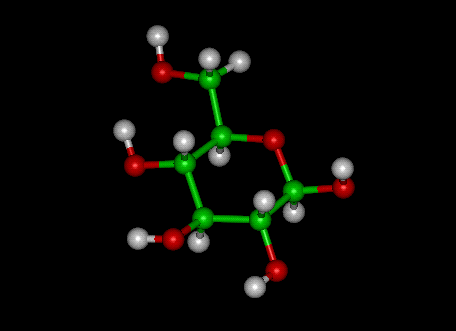
Caption: Dopamine neurotransmitter, molecular model. Dopamine is a chemical released by the brain as a neurotransmitter and a hormone. It has been intensively studied as it plays a crucial role in the brain's reward and pleasure pathways. It is released when a pleasurable new stimulus is encountered, and directs the brain to find more of the stimulus. For this reason it plays a significant role in addiction, not only to drugs that release or mimic dopamine (such as cocaine) but also to gambling and other social addictions. Lack of dopamine is linked to numerous disorders, such as Parkinson's disease, depression and schizophrenia. In this model atoms are shown as balls and are colour coded: carbon (grey), oxygen (red), nitrogen (blue) and hydrogen (white). Information from The Science Photo Library

Monday, December 6, 2010

Drugs, Brain & Behavior - Parts of the Brain

Today we started our last unit of the fall semester: Drugs, Brain and Behavior (The Science of Addiction).

Below is the video we watched in class on how a PET scanner works.


For homework you need to finish the online activity interpreting PET scans and answer the questions. Click on the picture to link to the activity.

Friday, December 3, 2010

Homework for Monday

Today we finished adding muscles to the skeletons and played "Ben Tony Says" to review the muscles.


On Monday we will be starting our last unit of the fall term: The NIH's Drugs, Brain & Behavior Curriculum.

Please read section 35.3 and take notes for a reading quiz.

Thursday, December 2, 2010

Our Friend - Ben Tony The Skeleton

Olymar brought up a skeleton from another classroom to help us better see how the joints fit together. Below is a picture of F period with "Ben Tony."


Homework: Study the muscles in the post below and please remember to bring a device with internet to class tomorrow to complete course evaluations.

Wednesday, December 1, 2010

Muscular System

Homework for Friday:
Read a general overview of muscles here and study the major muscles below. We'll be playing a game to see how well you know which muscles are located where.

Putting Together the Skeleton

Today and tomorrow we will be assembling the skeletons and learning about the specific types of joints and bone composition. If time, we will start to add some of the major muscles.